
About Flashline
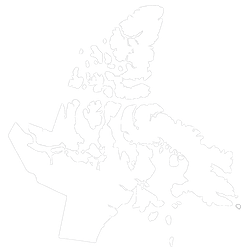
Located in Nunavut, Canada
The Flashline Mars Arctic Research Station (FMARS) is the first of two simulated Mars habitats (or Mars Analogue Research Stations) established and maintained by the Mars Society. The station is located on Devon Island, a Mars analogue environment and polar desert, approximately 165 kilometers (103 mi) northeast of the hamlet of Resolute in Nunavut, Canada. The station is situated on Haynes Ridge, overlooking the Haughton impact crater, a 23 kilometer (14 mi) diameter crater formed approximately 39 million years ago.
Analogue Research Program
FMARS is operated by Mars Society researchers and is made available to NASA and selected scientists, engineers and other professionals from a variety of institutions worldwide to support science investigations and exploration research at the Mars analogue site.
As an operational testbed, the station serves as a central element in support of parallel studies of the technologies, strategies, architectural design, and human factors involved in human missions to Mars. The facility also brings to the field compact laboratories in which in-depth data analysis can begin before scientists leave the field site and return to their home institutions.