
Mars160 FMARS Final Mission Report
Hello from Mars,
火星からこんにちは (Kasei kara konnichiwa),
Привет с Марса (Privet s Marsa),
मंगल ग्रह से नमस्ते (Mangal grah se Namaste),
Salutations Martiennes,
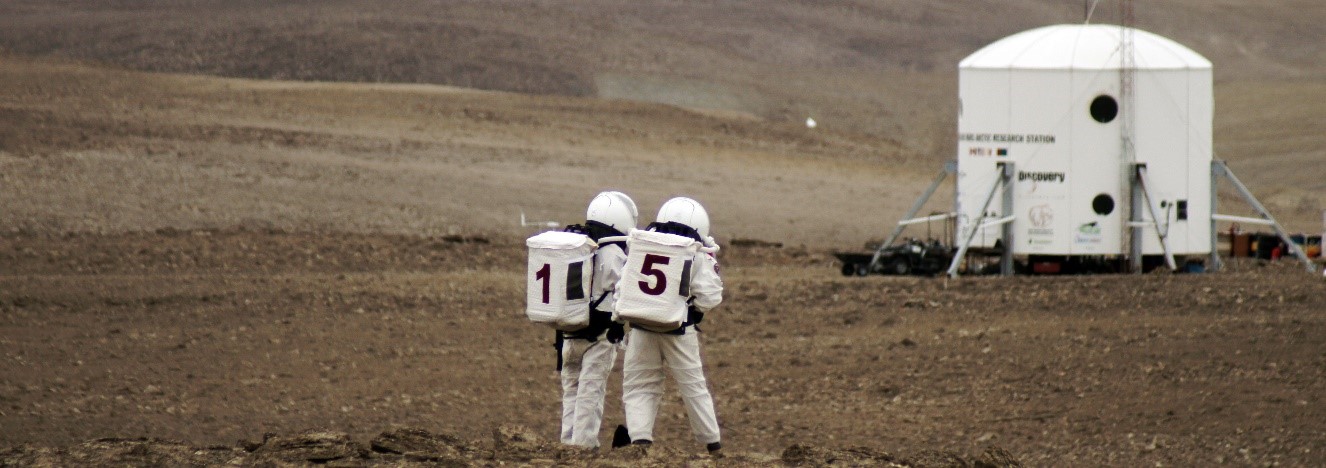
This is the final expedition of the Mars 160 program. We are 6 people living in the F-MARS, in the High Arctic, far from home. Over here we can only rely on ourselves. The nearest city is Resolute Bay, 1 hour of flight from the station.
We have this unique opportunity to sojourn in one of the greatest Mars analog environment on Earth! Mars atmosphere is quite cold and Polar climate is similar. Patterned ground features, characteristic of the permafrost, are observed here and there. On Mars, you would find impact craters in various size and age. Haughton crater is 15 km in diameter and 39 million years old. The station sit on its edge. However, unlike Mars, this place is populated by living extremophile organisms. But some of them could be the key to the survival of the first Mars settlers or to find past life on this planet!
Our goal is to experience some of the remoteness of Mars to learn how to conduct field science operation in such conditions. The scientific investigations are diverse and ambitious.
Life
30 days in Arctic felt like 80 days in Utah desert. Time stretched here and we are adjusting to the environment, just as the humans will do on Mars. By looking at the landscape, almost nothing reminds us of Earth. No signs of any civilization. No signs of life. Just as it will be on Mars. FMARS station showed us vividly how it would feel like to live and work in the alien world.
Resources are also more limited here than at MDRS, especially power. This imposes a limit on what we do and when we do it. To conserve fuel, the generator is ran 9 hours a day, with gaps up to two hours. When the generator is off, there is no heater, no comms, no cooking. Hopefully we all have laptops that can ran for few hours on the battery, allowing us to keep working. During comms windows, Internet is our only regular way to communicate. Satellite based communication imposes new constraints on how we use it. The bandwidth of few kB/s and the latency rarely below few seconds, if not losing the satellite signal, does not allow us for much more than emailing with the remote team and our relatives.
Unlike the MDRS journeys, we are self-sufficient regarding the water supply which is fetched from a river few hundred meters down the hill. However, we arrived at the station with the food we would get for the entire mission. As the end of the expedition approaches we have seen our food supplies shrinking. Even with safety margin, it is a strange feeling to have noticed that we are actually limited in food supply. This is not something we usually experienced in our regular life. Therefore, we are taking care that nothing got wasted!
The Arctic is a much more extreme environment than Utah. Our operations have to be much more autonomous and self-sufficient on a day to day basis. Communications are more limited, requiring independence of thought and action. This is not a bad thing, with a crew of competent, motivated people this is actually liberating. It does, however, mean that more time must be spent on basic Hab tasks, underlying the importance of automation to crewed missions to Mars and elsewhere. Being in an extreme environment means that safety considerations come first. There is a greater awareness when we are on EVA of distance from the Hab and the instability of the weather.
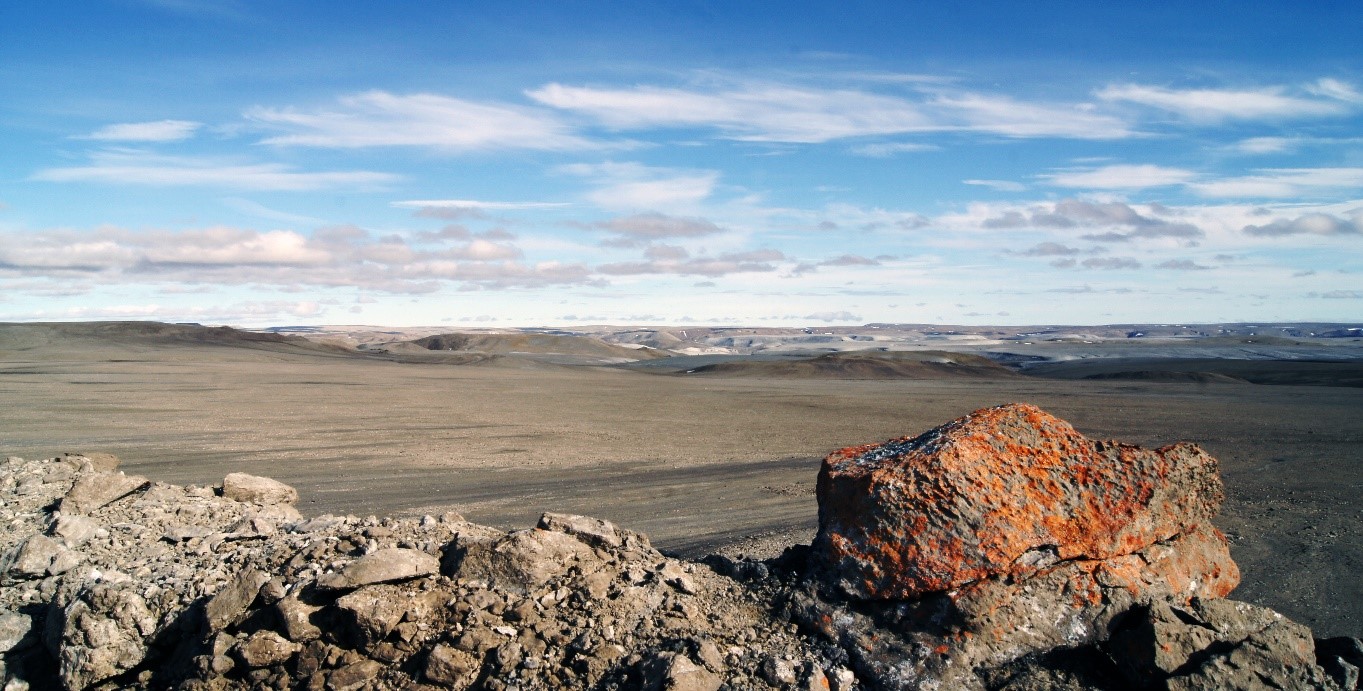
After this expedition got delayed by more than 3 weeks due to bad weather and ground conditions that prevented us to land on schedule, the mission objectives had to be redefined under the new time constraints. Therefore, no engineering project is conducted during this expedition. The unique features of the field gives priority to the field science activities over all the rest. That is why we have directed all our efforts to fulfill as many field science objectives as we can.
Geology
The month at FMARS has been a very valuable experience for us in that it has better equipped us to assess previous Mars analogue research at Haughton crater and provided an opportunity for our own investigations.
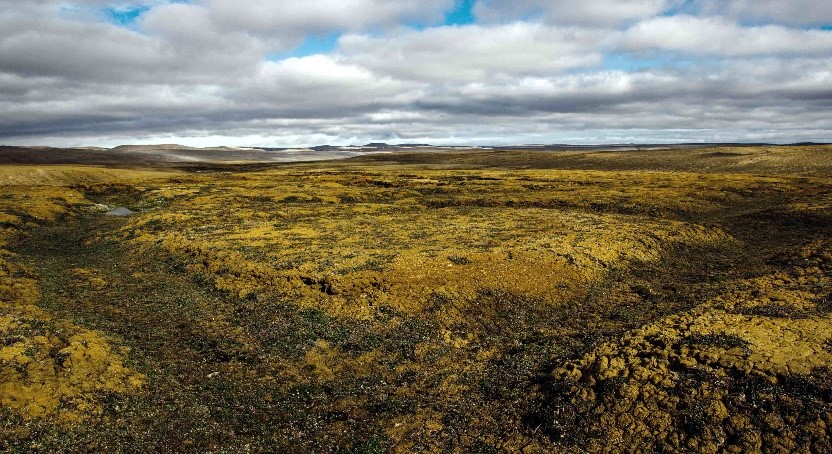 Part of what makes FMARS an ideal Mars analog facility is its location in a periglacial environment along the rim of an ancient impact crater. This is a rare setting to have on Earth, but it is repeated planet-wide on Mars. Based on observations by the Phoenix mission in 2008, the role of water ice permafrost in the formation of periglacial features on Mars was confirmed making many periglacial processes on Earth a direct analog for Mars. This provides an opportunity to study some of the younger geological processes that are active on Mars today, right here on Earth.
One periglacial feature that is common between Mars and Earth is patterned ground. Formed as a result of expansion and contraction from freezing and melting permafrost, over time this process etches patterns into the ground ranging from a few meters to several tens of meters across. When comparing satellite images of the patterned ground in Haughton Crater to patterned ground on Mars, it is easy to see why these are such intriguing subjects to study near FMARS.
 |
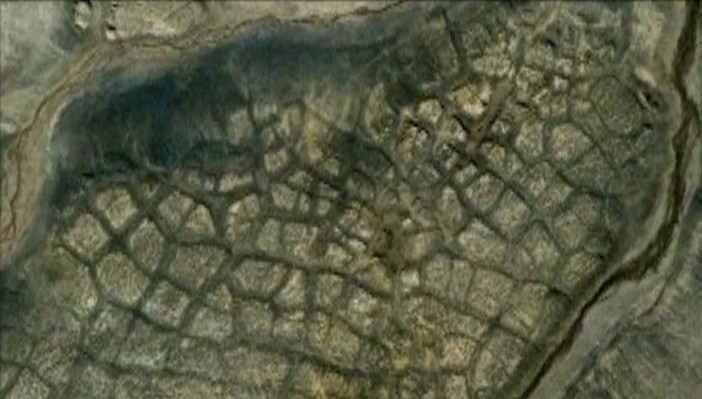 |
Over the course of Mars 160, dozens of samples have been collected from a variety of patterned ground types that once analyzed in a laboratory setting back on Earth will shed new insights into how these landforms evolve. By performing most of these field tasks in-sim as weather conditions allowed, it also provided insight into how a crewed mission might investigate similar features on Mars in the future. The results from this investigation will ultimately be submitted for peer-review in an applicable professional journal.
We have been able to collect extensive imagery of the Devon Island landscape that will enable me to refine the regolith landscape mapping methodologies previously developed for cold climate landscapes. Especially valuable have been the landscape features poorly expressed at previous study sites, such as different types of polygons, and a greater appreciation of role of near-surface hydrology in Arctic landscapes.
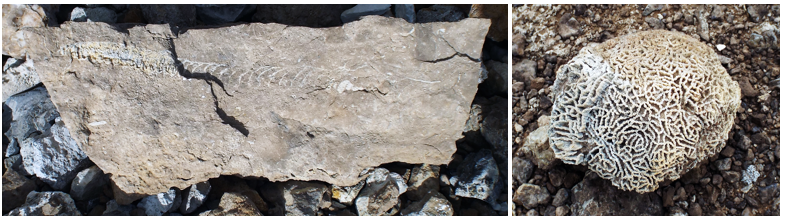
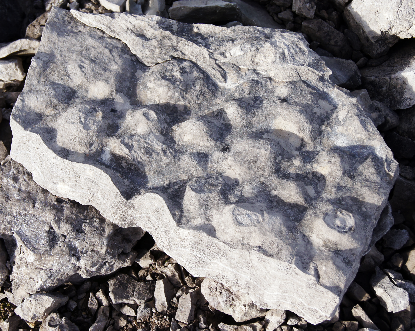 The bedrock geology of the rim of Haughton crater near the FMARS station is composed on the Allen Bay Formation. Two main facies (rock types with similar characteristics) are present, a dark brown dolostone and a white dolostone. The dark brown facies is rich in megafossil remains, especially of sponges (stromatoporoids), corals (tabulate and both colonial and solitary rugose), and molluscs, most prominently straight nautiloid cephalopods. This facieses commonly intensely bioturbated and may be thrombolitic (a microbial structure with a clotted fabric). The white facies is dominated by laminated and often stromatolitic dolostones, mudcacks and ripples have been rarely seen. Studying these rocks has been made difficult by the lack of coherent outcrop. However, the outcrops present do enable the context of the abundant displaced blocks to be placed in context.
We have also taken the opportunity to familiarize ourselves with impact related features of the Haughton crater. These have included the distinctive grey-coloured polymict melt sheets containing many different rock types, the monomict breccias consisting of fractured bedrock more or less in places with numerous shatter cones, and the polymict ejecta rocks. These impact-related rock types are common on the Moon and Mars, but rare on Earth, where craters are rapidly (geologically speaking) destroyed by erosion or hidden by burial. Here these rocks are widely distributed on the walls and across the floor of Haughton crater.
Biology
Biological exploration here at FMARS involves an array of themes, from documenting the Arctic flora to investigating biosignatures in ancient evaporite rocks. To test the efficiency of science operations on Mars, our scientific work is supported by Earth-based scientists.
 Hydrothermal sulfate deposits from the Impact supersite which is located near the middle of the Haughton crater have been sampled to investigate any viable or fossilized signatures of life originated and thrived during impact-induced hydrothermal event in the past. These gypsum-bearing evaporites from outcrops belong to the mid-Ordovician Bay Fiord Formation (39 mya). In the Bay Fiord Formation the gypsum was deposited through evaporation of seawater. Elsewhere in the crater gypsum is known to have formed as a result of the impact driven hydrothermal activity. Both the processes are considered to be analogous to the sulfate precipitation from the low-temperature aqueous fluid on Mars. So, any microbial life that was present in the brine could have found refuge in tiny fluid-inclusions of the gypsum crystals in the past or potentially left their marks in the depository layers while degradation. Hence, it is fascinating to explore the idea of preservation of biomarkers in evaporite rocks.
The abundance, and ecology of hypoliths and epiliths colonised on limestone in the Arctic are being documented. As well as, we intend to perform comparative genomic analysis on these hardy microbial communities. Identification and characterization of black epiliths, which are commonly seen to be growing on the melt water streaks that we call Recurrent Slope Lineae is also conducted. By studying these lithobionts – rock dwelling organisms – we are trying to understand the effect of moisture on the extent of colonization both in Polar (Arctic) and hot desert (Utah). So, this mission gives us an ideal opportunity to explore these microbial communities in two disparate environments, thereby, would provide an important baseline in this domain and help us anticipate “exophiles” in unanticipated niches of Mars.
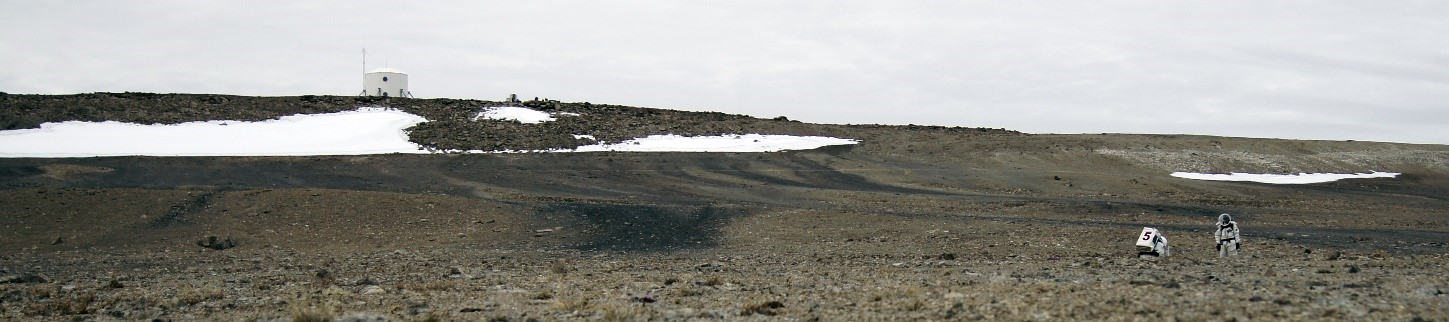
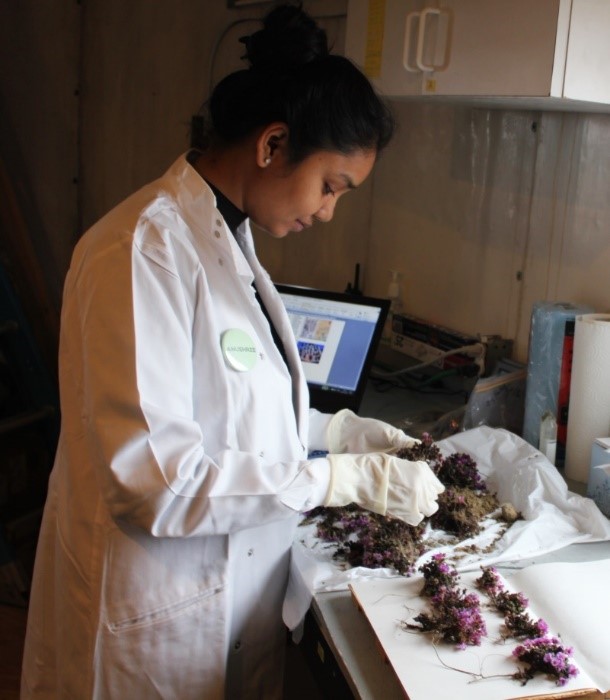 Mapping and surveying of lichen biodiversity, Arctic vesicular plants, and molecular analysis of Arctic Diatoms are being studied as well. Studying lichen biodiversity is important for this mission for two reasons. First, Lichen that form an intimate symbiosis with two very different species fungi (mycobionts) and algae (photobionts) and resistant enough to survive extremely low temperatures, high bombardment of ultra violet radiation for a long period of time and show excellent physiological adaptation in Mars-like conditions. So, they can serve as tools for understanding life in extreme environments. Second, for the operational advantage in full simulation suit we dedicate some our EVAs to sample lichen that are evident and easiest to find organisms. It is also about how we perform field science in spacesuit!
In the extreme Polar environment, vascular plants are thought to flower at specific time in response to lack of nutrients, low moisture and scarcity of pollinators to maximize the reproductive advantage. It is also thought that specific flowering time (phenology) is associated with microbial activity in the root zone of these plants. We want to assess how this association between root microbiom and plant phenology works, which can help us understanding the extreme survivability of Arctic plants, and possibly adaptation of crop plants for Mars.
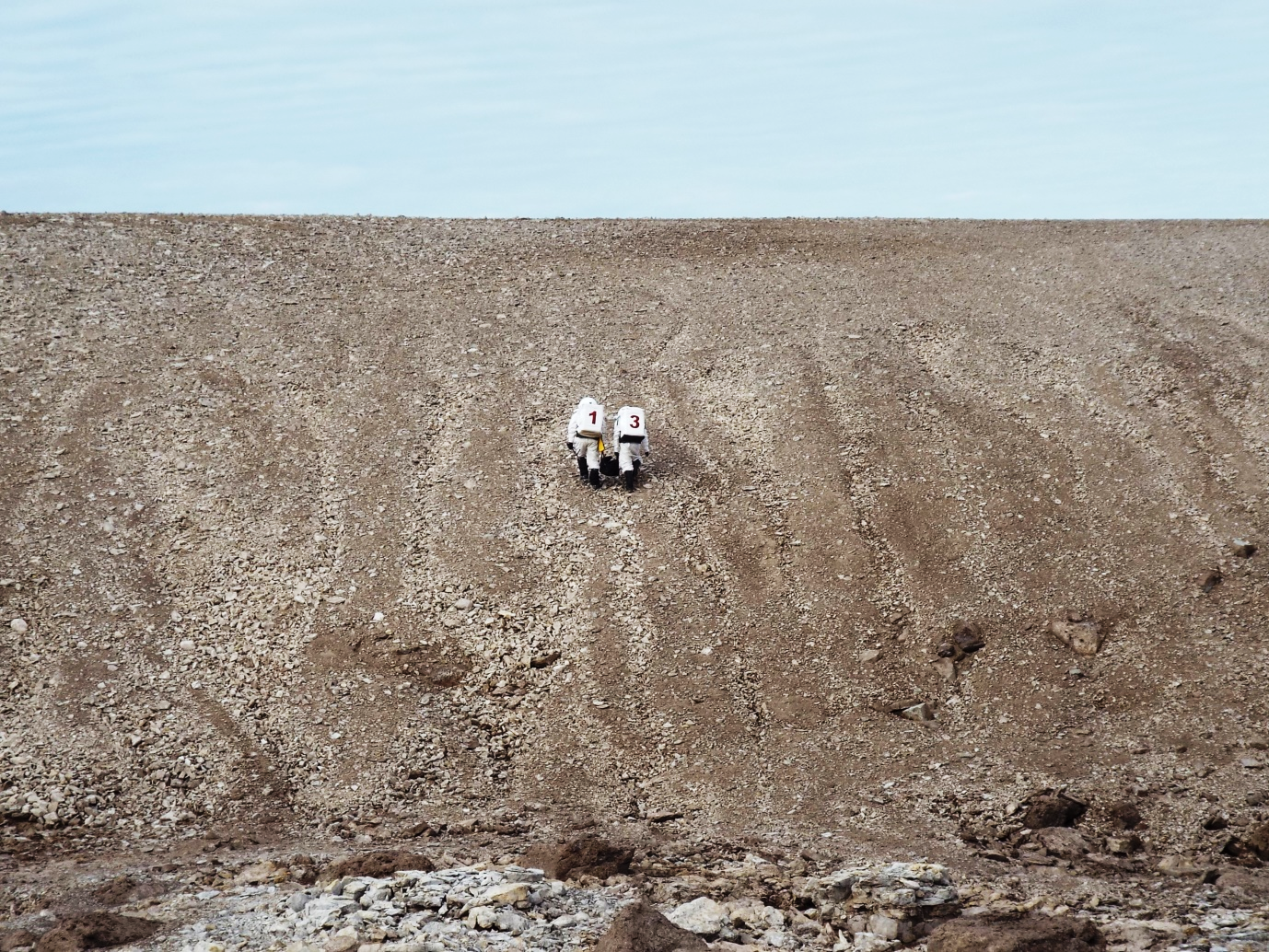
Science support and group dynamic studies
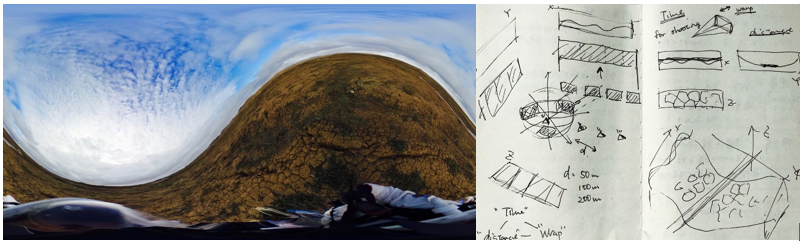
360° pictures have been taken in a square mesh pattern. Different distance between each points have been tested: 20, 50 and 100 meters. All of scenery points are navigated by GPS. The procedure at each documented point takes up to 2 minutes during a full simulated EVA of 2 to 3 hours. After the mission, it is intended to reconstruct the landscape with the 360° data in order to support the patterned ground study.
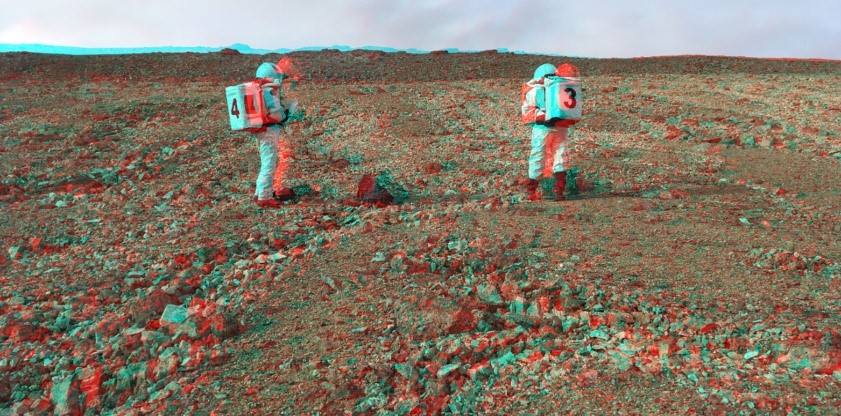 A stereograph kit has been designed prior to the mission and been used on the field during suited EVA to capture stereo anaglyph images (red and blue stereo images). The kit was designed thanks to the prior mission at the MDRS. It is compact and light weight to be carried easily during suited EVA. In addition, it is user friendly for anyone to do stereograph pictures. Finally, the main feature may be the very short time – around 3 seconds – required to take the two pictures. The delay between the shots is critical for the quality of the stereo anaglyph images. The field test involve recreating Phoenix lander anaglyph pictures of similar ground features. The height and the distance between the two pictures have been taken from the lander characteristics.
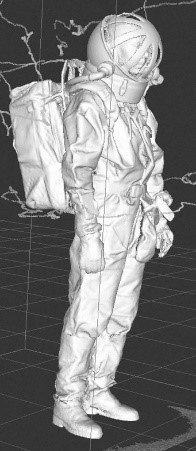 More 360° pictures and 3D scanning measurements have been taken inside the Hab to later on build VR views of the habitat. This will complement the 3D reconstruction of the interior done with CAD software. Lastly, 24 hour time lapse have been taken on the 1st and 2nd floor to understand the flow pattern of the people living inside. This data may help to design better layout of space habitat.
This part of the mission provided us with more interesting data about group cohesion, the influence of isolation and environment on crew behavior. Earth based science team will process the results of eight different tests and compare how the changes of location (from MDRS to FMARS) crew composition affected the psychological pattern of teamwork. This research will provide valuable data for the future Mars analogue missions and help Mars Society in a process of choosing the compatible people for long duration programs.
In order to assess the positive and negative influences of various feature of the mission, the crew is conducting a guided debriefing at regular intervals. This includes individual brainstorming of the main issues experienced by each crewmember, categorized them and finally having a group brainstorming to resolve the most important ones. These session have been found very insightful for crewmembers. Sharing our issues with the whole crew and working all together toward a solution is a crucial activity for building a strong and cohesive team. This is a critical group feature for crews operating under extreme environment such as Mars.
The limited internet access restricted the active outreach work during the simulation. On other side, the isolation helped to concentrate on documenting the mission in narrative genre, which can be compiled into a book. The outreach will be proceeding after the crew comes back to Earth and will be more engaging with the audience.
The odds have been mostly against us. The delay induced by the bad landing conditions have made us to adapt to the constraints. There was no way around. And since our journey is a one life time opportunity, we learn how to push our boundaries to make the remaining time to be worthwhile. This is not a trivial thing to do and it has not been done without glitches. But at the end of the day, we are in this adventure all together, relying on each other. We face the unexpected events as a crew.
The Mars 160 program and this expedition in particular has been supported by Earth based scientists: Dr Kathy Bywater, NASA Ames Research Center – USA Dr Vincent Chevrier, University of Arkansas, USA – Prof Charles Cockell, University of Edinburgh, UK – Dr Alfonso Davila, NASA Ames Research Centre, USA – Polina Kuznetsova, Institute of Biomedical Problems, Russia – Dr Chris Mckay, NASA Ames Research Centre, USA – Dr Rebecca Merica, University of Nevada, USA – Dr Irene Lia Schlacht, Politechnico di Milano, Italy – Dr Matthew Siegler, Southern Methodist University, USA – Dr Hanna Sizemore, Planetary Science Institute, USA – Dr David Wilson, NASA Ames Research Center, USA.
As Principal Investigators: Dr Shannon Rupert, The Mars Society, USA – Paul Sokoloff, Canadian Museum of Nature, Canada.
As The Mars Society president: Dr Robert Zubrin, USA.
Mars 160 crewmemebers would like to express their sincere gratitude to them:
Thank you!
ありがとう (Aligato),
Спасибо (Spasibo),
धन्यवाद (Dhanyawad),
Merci!