Tiriganiaq (CREW 19) Sol 3 Report 17-7-2026
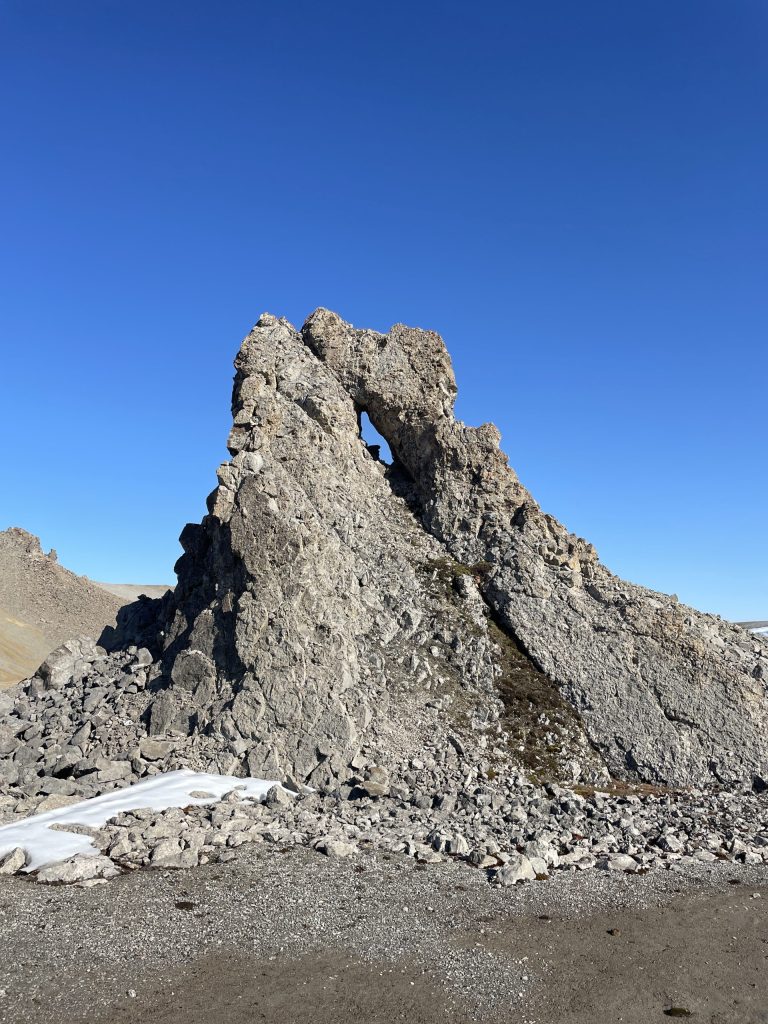
The arctic foxes took a long spacewalk today to visit the first of mission specialist Adrian’s research sites and revisit an oasis that commander Trevor discovered last year when he served as executive officer on Crew 18.
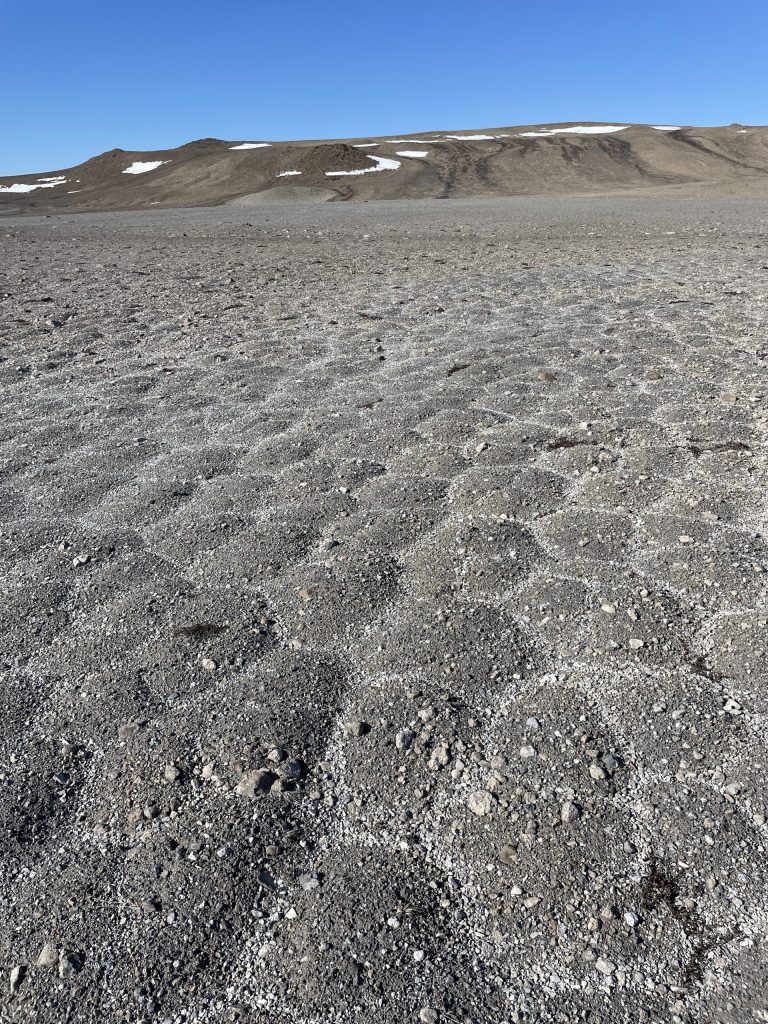
It was a beautiful day for this task, sunny and temperate. The landscape kept us guessing. It seemed to change dramatically every few steps. We hopped rocks, hobbled on soft permafrost, and picked our way through delicate patches of arctic willow and purple mountain saxifrage. The oasis was dry this year, so unfortunately, we could not take a water sample for further analysis, but we took note of the lush mats of lichen and vegetation. With the exception of these splashes of green and pink, we could easily have been standing atop a rocky outcropping on Mars.
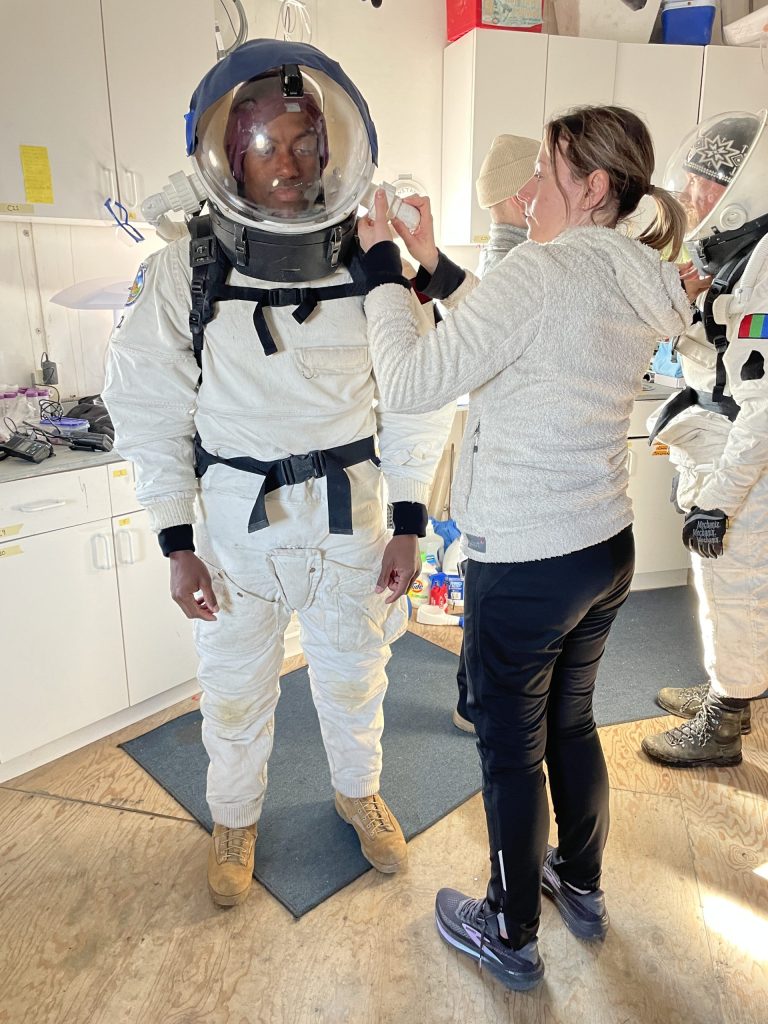
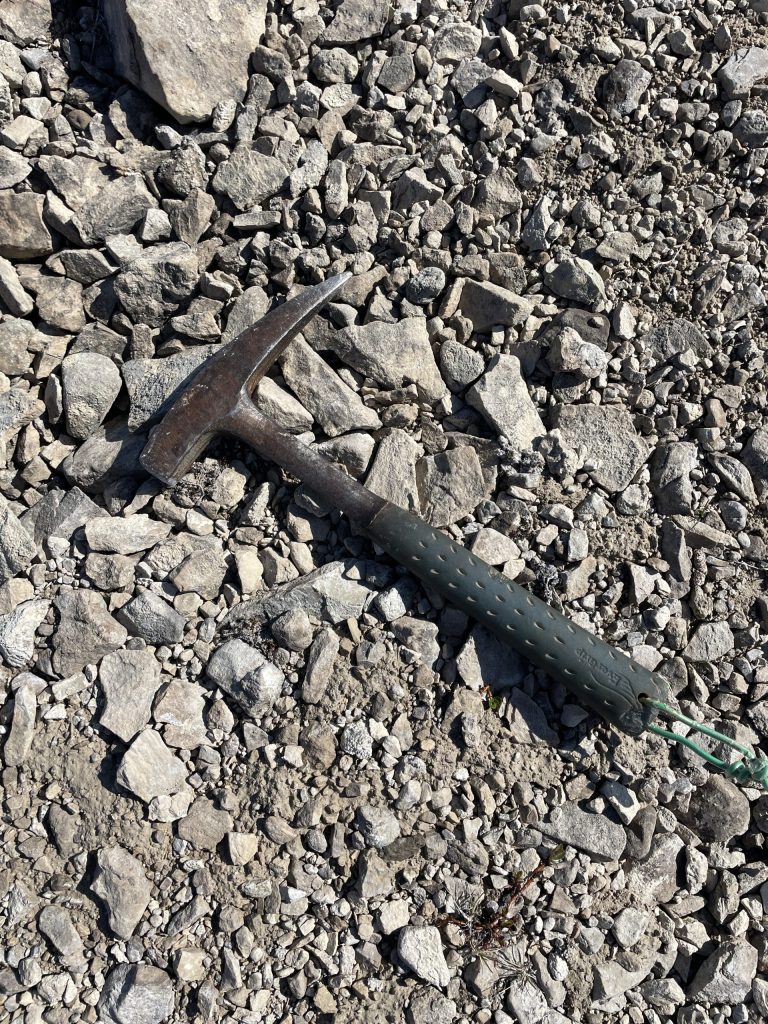
Next Adrian used GPS to navigate us to a series of fracture lines formed over 30 million years ago in the cataclysmic event that created the Haughton crater, on the edge of which our habitat is currently perched. These formed when the impact created fault lines, and the water heated by the melted rock flowing through the cracks reacted with the surrounding bedrock to create new alteration minerals that Adrian used his field tools to sample and assess.
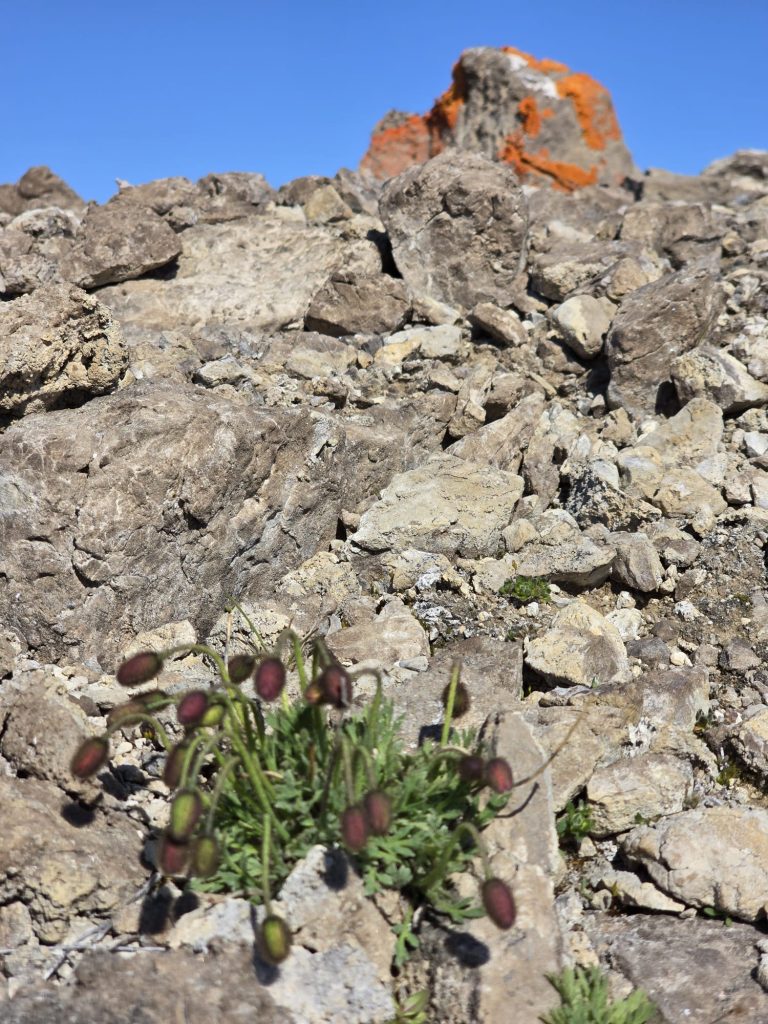
On the way back to the hab, Adrian picked up a few rocks with distinctive diagonal lines emanating outward like a fan. These were shatter cones, he explained. Shatter cones are created by the shockwaves thrown out by a high-power explosion. When left in place, geologists can use the linear patterns in shatter cones to identify the center of the blast.
We returned the shatter cones where we found them. Research missions like ours draw inquisitive people who want to study and learn as much as possible about and from our surroundings. Commander Trevor has taken great care to set an important standard for our time here: That we must always remember that we are visitors here on ᑕᓪᓗᕈᑎᑦ (Tallurutit). This is the largest island in the world with no long-term human residents. We still keep centrally in mind the necessity to honor this land and those who spend significant time here, for whom this island is more than a unique, rich site for research and analog space exploration.
This analog mission presents an opportunity to think about how this land ethic can be applied to future travel and research to places where humans are only visitors. How might visitors to Mars encounter the red planet as we do Tallurutit, with respect and as small a footprint as possible, even as we seek to learn as much as we can during our precious time in this remarkable place?