Flashline-16 Science Report-02 03-07-2024
Author: Natasha Nicholson – Chief Science Officer
Devon Island, 75°26’08.3”N 89°49’41.6”W, Nunavut.
Aim:
- To gather water samples from creek closest to FMARS habitat and assess its potability.
Gathering water:
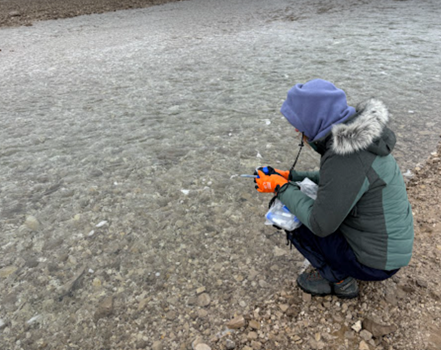
Thick working rubber gloves were sterilised with isopropanol. Water was gathered in triplicate in 50ml flat-bottomed falcon tubes (see Fig.1), upstream from where the water was being gathered in jerry cans.
Coliform test:
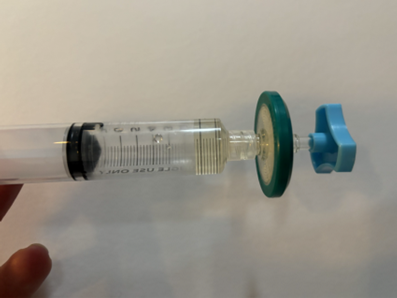
A coliform specific water test from C4HydroÔusing their MiniLab kit. The water was filtered and discarded, the filter transferred to another syringe. A nutrient solution suitable for coliform microbes was then pushed through the outflow of the filter, pushing any trapped microbe back into the original syringe, resulting in a concentrated solution of nutrients and any trapped microbes. This syringe was put in the MiniLab incubator at ~28°C, and will be checked for a change in colour after 24 hours (see Fig.2).
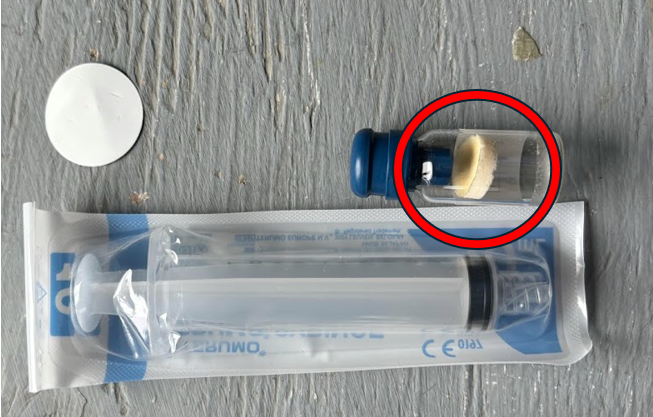
It was noted that the instructions for the coliform and minilab kits specified a storage temperature constraint of 15-30°C, but the temperature in the habitat gets down to -55°C, which may have affected some of the reagents and ingredients. For example, the culture solution for the coliforms was a dry powder to be rehydrated with a separate ampule of sterile, however, the powder had solidified into a cake (Fig.3) that required violent agitation before it broke up enough to risk adding the water.
pH test:
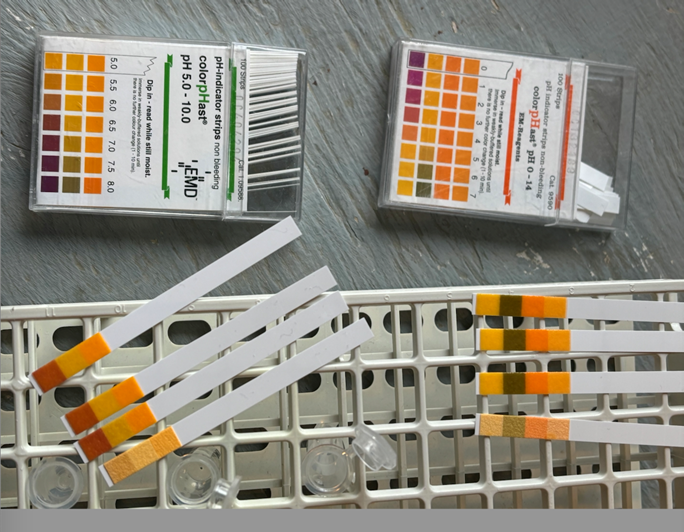
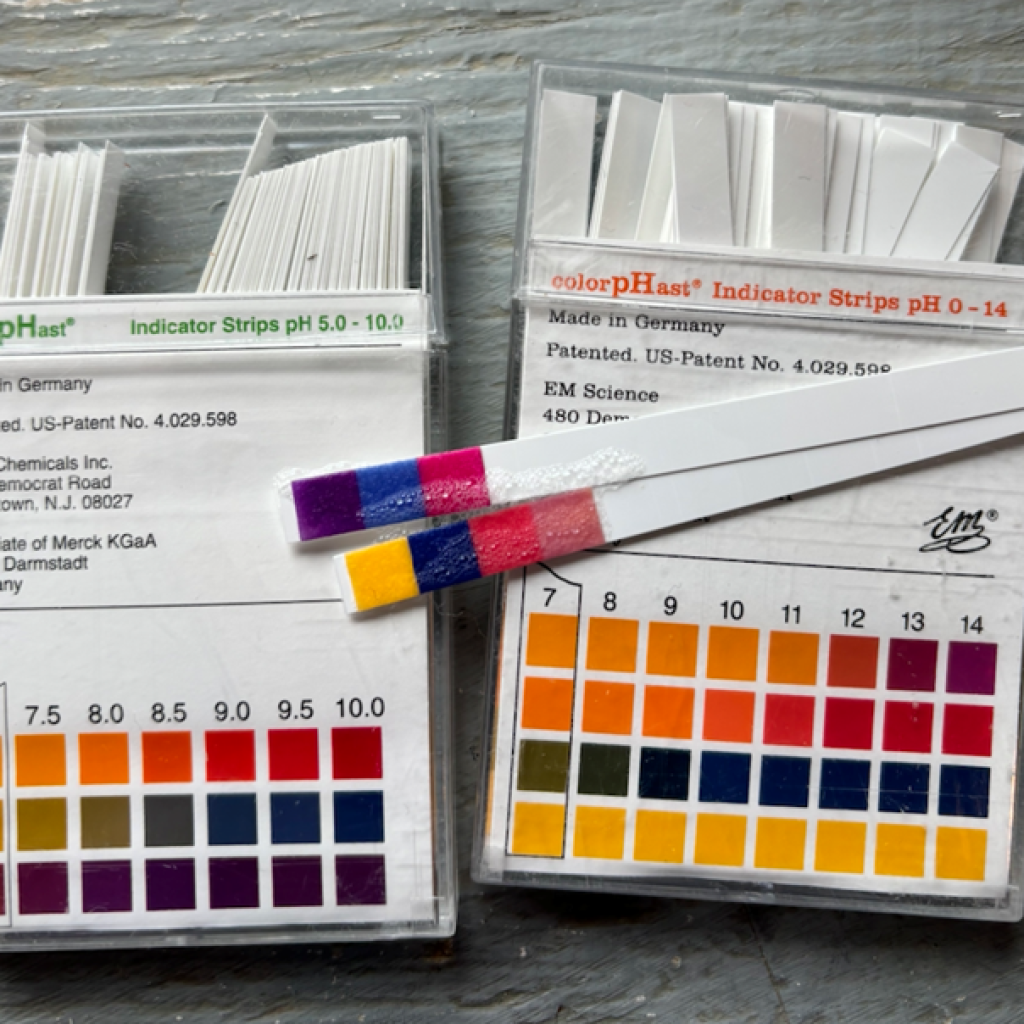
To assess the pH of the water, 2ml of each triplicate was transferred into Eppendorf tubes, and tested with colorpHast pH-indicator strips, both pH0-14 and pH5.0-10.0.
In both cases the tests seemed to indicate a pH6.5 (see Fig.4), but suffer from the same uncertainty as the C4Hydro tests, in that they should be stored at 15-30°C, which has not been the case. To check whether the strips were working, they were dipped into an Eppendorf tube filled with 20% bleach, and reacted appropriately, indicating around pH12, (see Fig.5), suggesting the reading of pH6.5 was mostly accurate.