FLASHLINE-16 Daily Report 13 & 14-07-2024
Note: this is the final daily report of the FMARS-16 mission. It includes the daily report for both 7/13 and 7/14.
The Arctic Wolves awoke on Friday morning by splitting up into two teams. Crew Engineer Robbins and I proceeded to the runway with the team’s personal luggage, whereas the rest of the team tidied up the habitat and stayed in contact with our charter plane company for further instructions. The trip to the runway was straightforward; Robbins and I had taken it several times yesterday in our ATVs as we moved the drums and trash to the runway. The weather was cloudy and foggy, but our forecast expected it to clear up very soon.
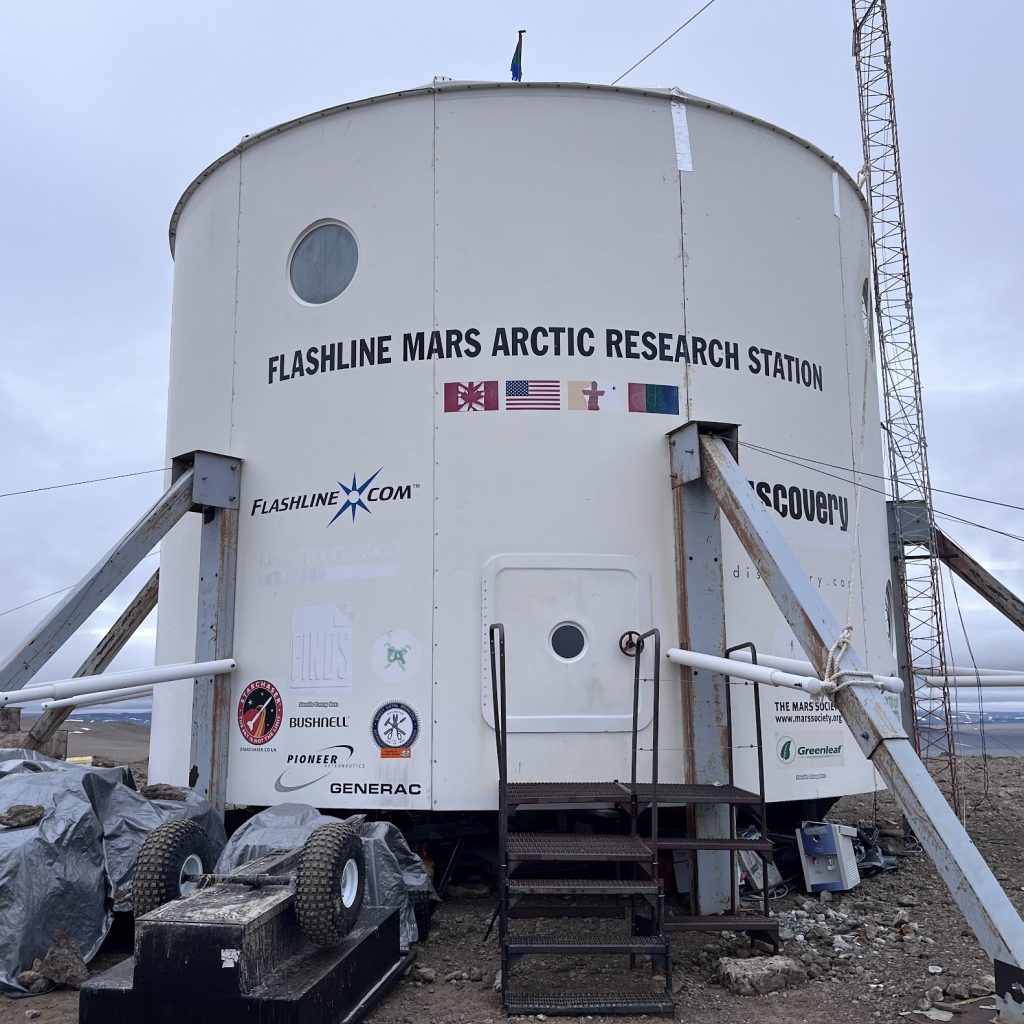
The crew gathered on the second floor of the station and waited. Some played card games to pass the time, others used it as an opportunity to nap, and I used the time to climb the radio tower of the habitat to inspect last year’s roof sealing work. Fortunately, they were still holding and appeared robust, but better climbing equipment would be needed to more safely seal the rest of the roof in 2025. As the morning stretched out, we realized that our chances of getting off Devon today were decreasing; the weather at Resolute Bay would not allow any planes to safely take off or land.
We learned that the inclement weather wasn’t affecting only Devon Island and Resolute Bay, but much of the northern arctic. Our commercial flight was canceled, and we were notified by the charter that we would not be picked up today. It was definitely a morale blow to the team, but we spent the next few hours canceling subsequent flights and lodging. Once the dust had settled in the afternoon, a new plan was in place. We would attempt an early pickup from Devon via charter plane on Saturday morning, and a backup commercial flight for Saturday afternoon was already scheduled. It was essentially a duplicate plan of today’s with a hope that weather would be more favorable.
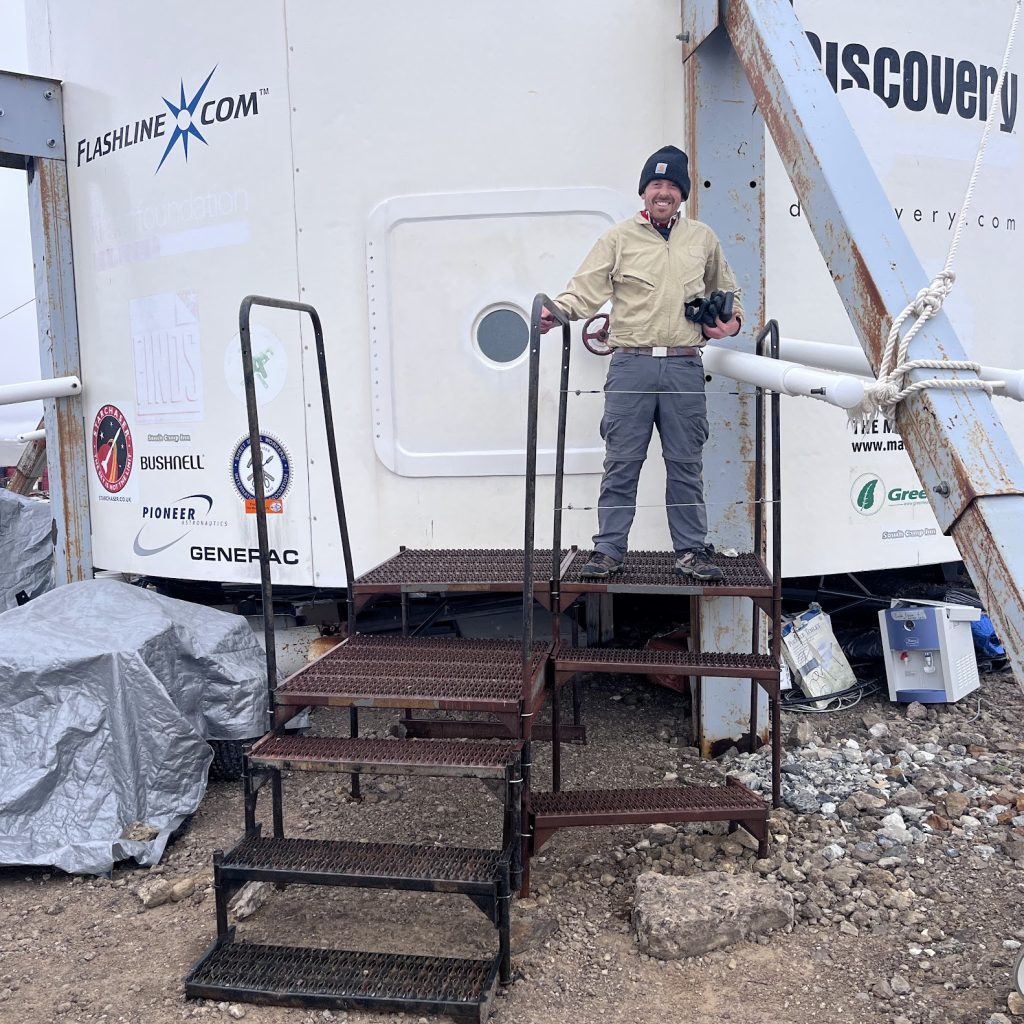
Friday evening was relatively uneventful as the Arctic Wolves stayed in a holding pattern for departure (aviation pun intended). Any personal luggage that was needed for the night was returned to the station, and we repaired some of the staircases to the main and engineering airlocks. The team went to bed relatively early, because the weather started to worsen – the worst we have had yet! From your sleeping bag in the individual rooms, you could hear the wind howling and the downpour hitting the base’s exterior. We had conflicting weather forecasts from different sources if the morning would clear up or not, so we dozed off with high hopes.
I was woken up on Saturday morning around 7:30 AM by HSO Swarmer knocking on my room door, yelling “they are fueling up the plane!” With less than an hour before takeoff and a 40-minute duration flight, this meant we had to spring into action – and fast. Everyone packed up their luggage and handed them off to Crew Engineer Robbins and CSO Nicholson, who made the last ATV trip to the runway to drop off gear. The rest of us stayed behind and performed the final tasks. We dubbed these “the final tasks” because they remove functionality from the hab and shouldn’t be performed unless we are immediately leaving the hab:
- Bear mirrors were stowed inside.
- The incinerator was covered and disassembled to prevent corrosion over the winter.
- The main generator (Yellow Submarine) had fuel stabilizer added to its tank and was placed in its protective shed.
- The last ATV had fuel stabilizer added and was tarped.
- Starlink was disconnected and stowed inside.
The Starlink action was performed right after HSO Swarmer got confirmation that our Twin Otter plane was in the air, and after we notified Mission Support that we were going to attempt to depart the island over the next hour. After a 10-minute final sweep of the habitat, we said goodbye to the hab and began our final trek to the runway.
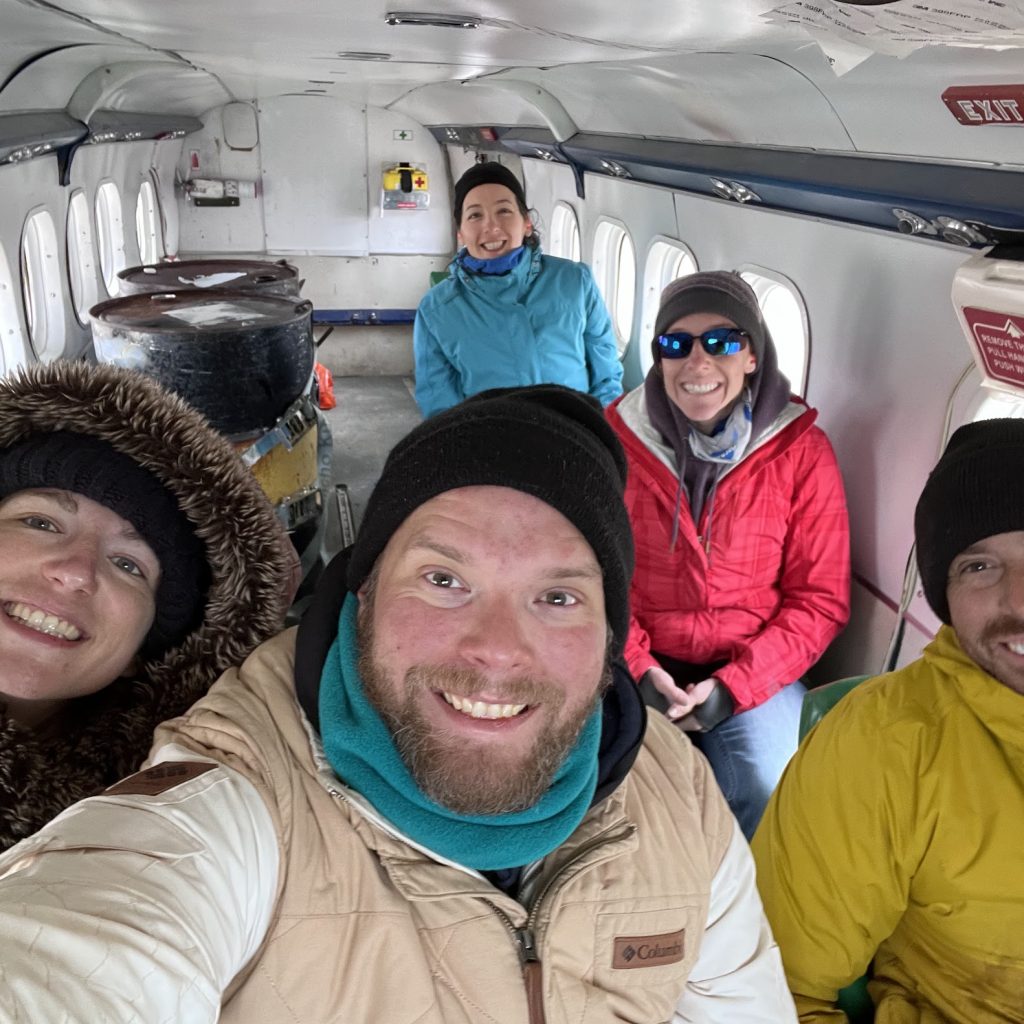
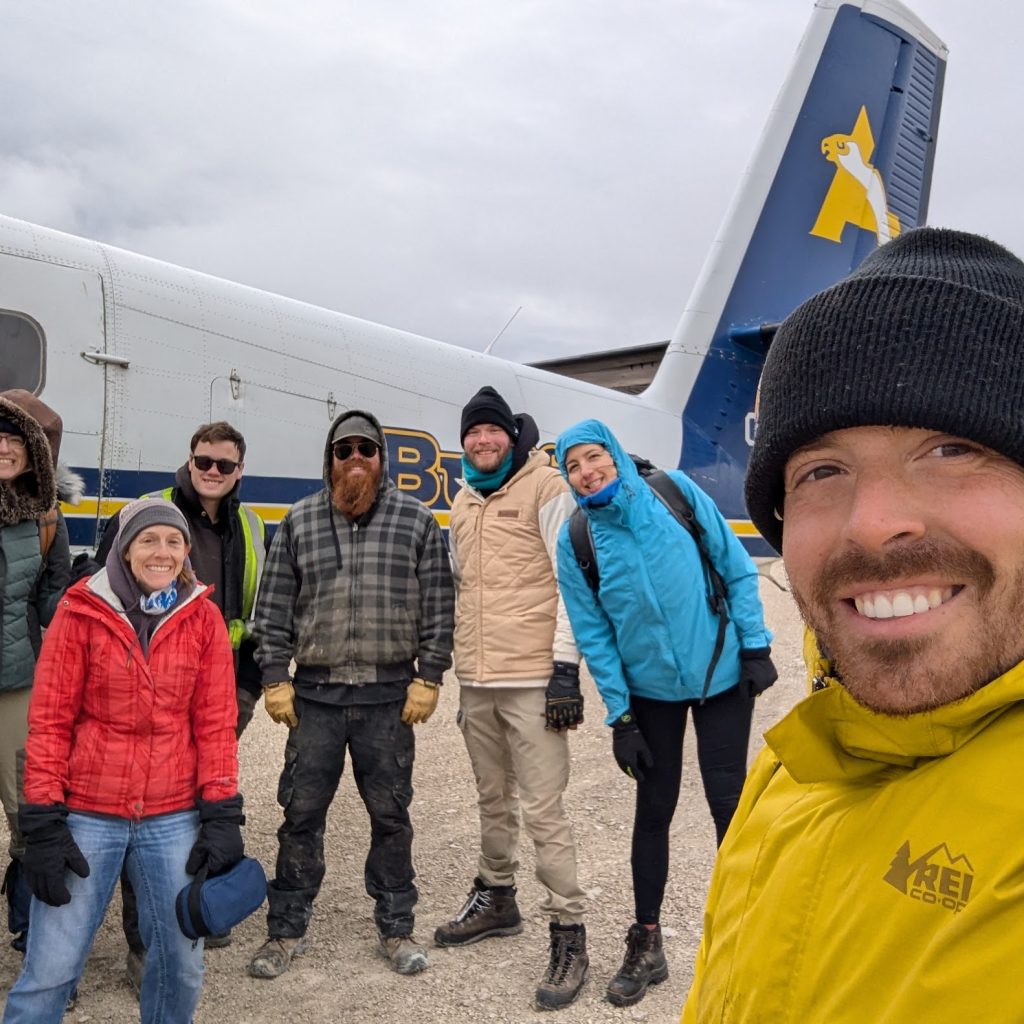
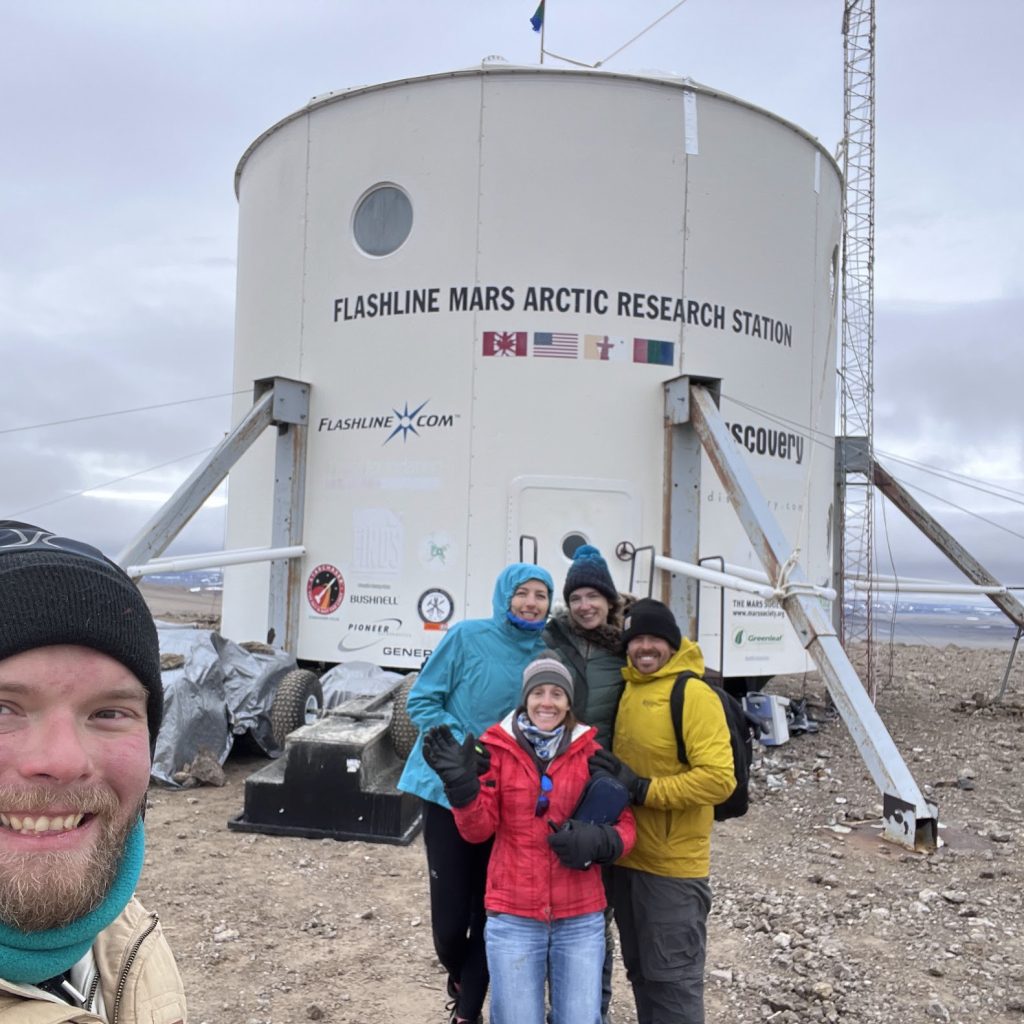
As we walked to the runway, the whole experience was analogous to the deorbiting phase of true spaceflight. We were in an uncertain phase of the mission (e.g. would the plane be able to land? did we try to bring too much weight on the plane? would we be able to take off?), similar to the dangers of re-entry and the high temperatures that come with it. We would not be able to communicate with mission support during this time, and spacecraft are not able to communicate with mission control beyond the plasma field they generate traveling though the upper atmosphere. However, within a minute of reaching the runway on foot, Commander Cinelli exclaimed “is that the plane?” Indeed, we had timed the rendezvous to within seconds! The Twin Otter landed, we helped the crew load equipment and our two gas drums into the vehicle, and we were back in the air in 15 minutes towards Resolute.
If I had previously thought the flight towards Devon Island was an emotional moment, I was not prepared for the flight leaving it. Seeing the terrain below that once felt alien but now felt familiar – like home – and made me want to stay. The amount of snow and water in streams that we saw on descent had significantly decreased as Devon Island became a perennial arctic desert. We saw tall ridges and deep rivers that I’m sure my fellow crew members wished we could have ventured to on EVA, if only we had more time. I left Devon Island feeling a strong sense of accomplishment and pride, but also a longing to have done so much more in my ten days there.
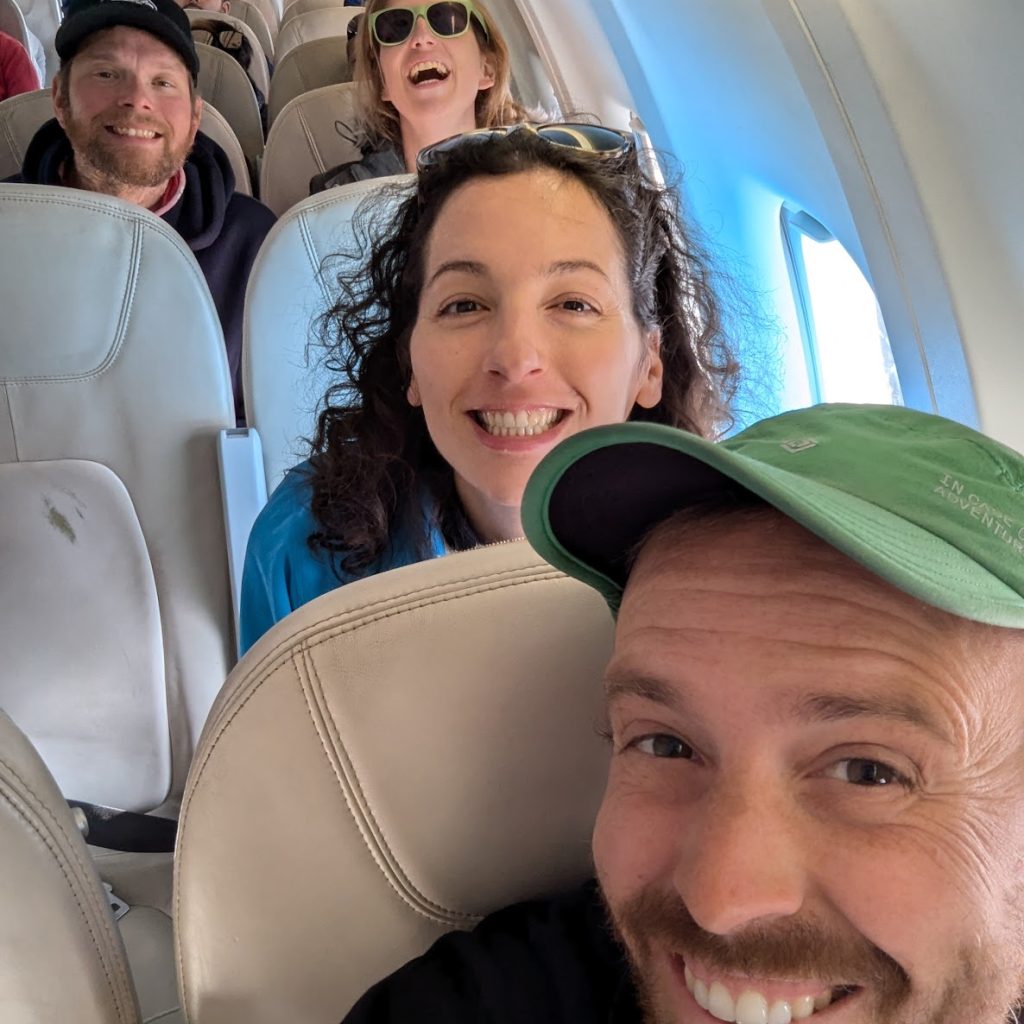
The team split up on Resolute. Some arrived early at the airport to repack equipment and check in on the flight, and others grabbed a quick meal and shower at the south camp inn. We left on our first commercial flight this afternoon, and landed back in Iqaluit, the capitol of Nunavut. The team checked into their hotel rooms for the night, picked up some supplies at a local convenience store, and grabbed dinner. Tomorrow would be our last flight together before we split up and continued our very different – yet equally exciting – lives and careers.
And at this point, my daily reports come to an end.
Sometimes documenting the tasks of our crew seemed like a chore, but looking back on the cumulative 10,000+ words, it tells the full and complete story of the FMARS-16 Arctic Wolves crew. 17 days of adventure, with 10 of those days on Devon Island, and 3 of those days in true analog astronaut simulation. In the coming weeks, the science we have gathered will be analyzed and hopefully lead to published research that advance biology, geology, human psychology, and our familiarity with aerospace operations. The crew will resume their professions and take these experiences back with them to further their aerospace and space exploration passions. And the environment of Devon Island will remain the same, desolate and beautiful – as it should be.
The crew is already excited for what next year’s mission will look like. We have talked about improving our water system, increasing our renewable energy sources, determining schedules to spend more time in simulation, and finding better ways to perform outreach to the local community and Mars Society while on mission. Last year’s FMARS-15 mission was focused on restoring the habitat to a functional state, and FMARS-16 further improved the base to perform real missions. And in 2025, FMARS-17 is poised to be a world-class analog environment that is unlike any on Earth, and very much like that of the Moon and Mars. Stay tuned with the Mars Society for opportunities to be involved in that future with us!
Signing off (for now),
Logistics Officer Michael Andrews